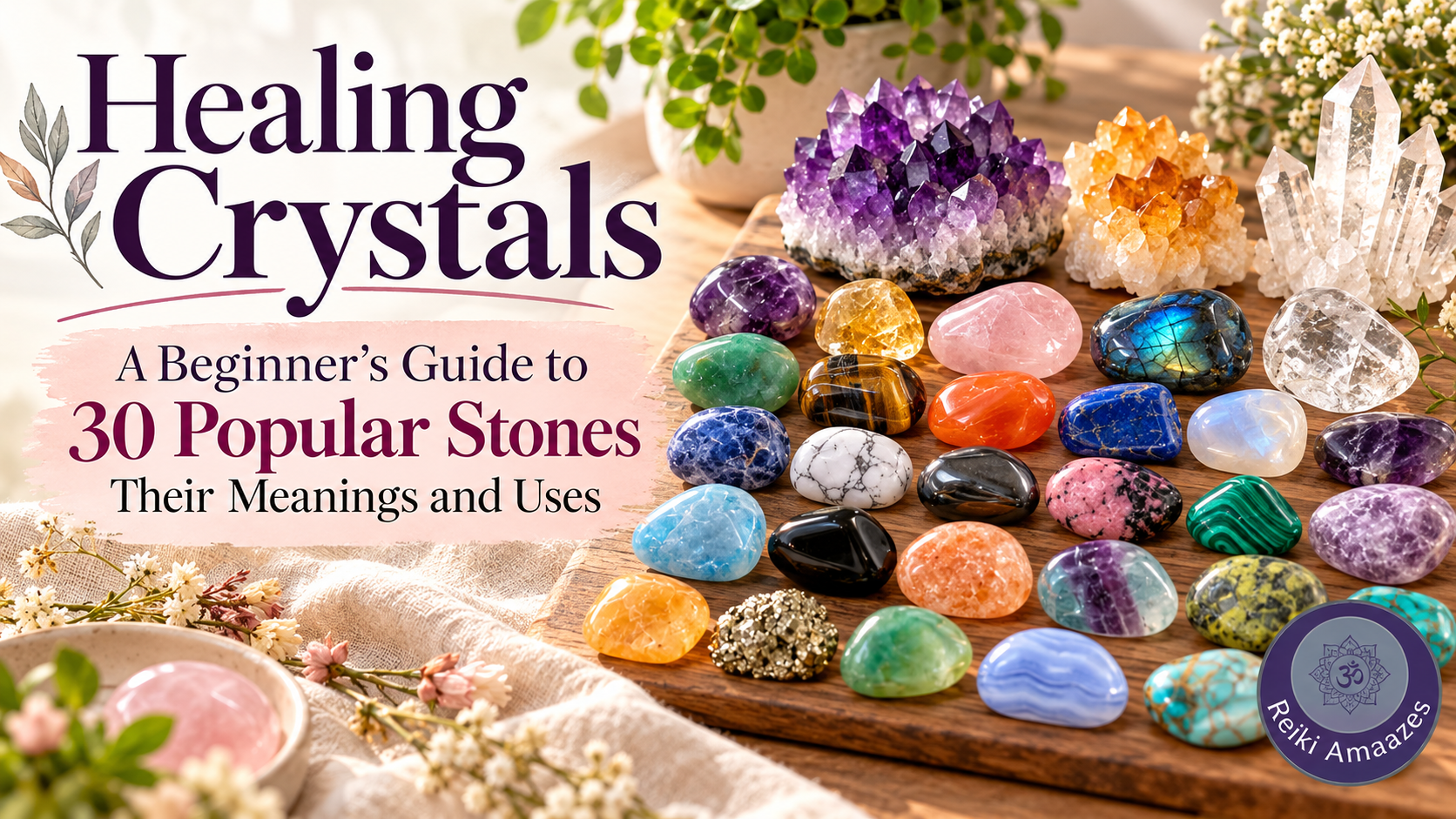
Have you ever picked up a beautiful healing crystal and wondered what makes it so special? Perhaps you’ve seen rose quartz associated with love or clear quartz linked to clarity and wondered how people use these stones in their daily lives.
This guide covers what crystals can and cannot do, how to choose a first stone, thirty popular stones and what each is traditionally used for, how to cleanse them, and how they fit into reiki and meditation. It is written for someone starting from zero.
What Healing Crystals Are, and What They Can and Cannot Do
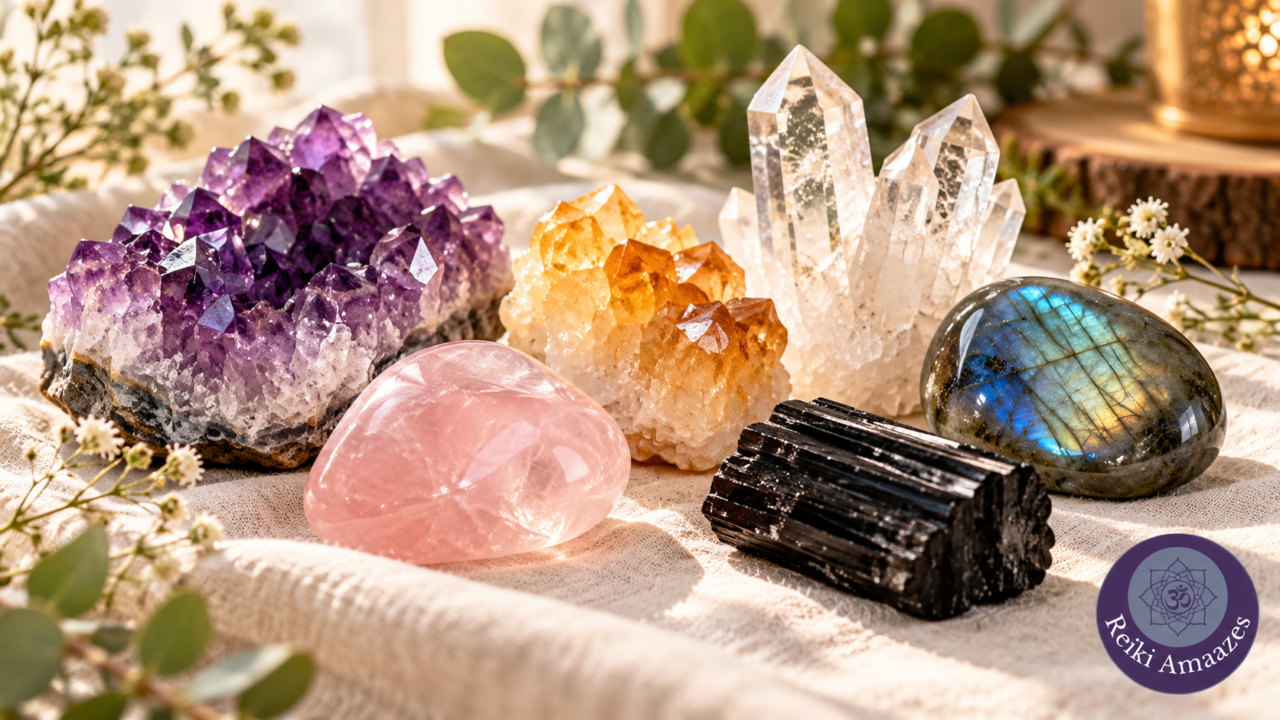
Healing crystals are naturally occurring minerals and stones that people have used for centuries in spiritual practices, rituals, and personal reflection. Each crystal has its own colour, structure, and traditional symbolism, which is why different stones are associated with different intentions, from love and confidence to clarity and protection.
In crystal healing traditions, people use these stones during meditation, mindfulness, and energy work to help focus their attention and create meaningful daily rituals. If you’re new to crystals, understanding what they are and what different stones traditionally represent is a wonderful place to start.
Here is what a crystal can reasonably do for you:
- Give your intention a physical object. Choosing a stone for calm and keeping it on your desk gives you a reminder each time you see it.
- Anchor a meditation. Holding something cool and weighty gives your hands and attention a place to rest.
- Add ritual to a routine. A few minutes with a stone at the start or end of the day can mark a change of pace.
- Support reiki practice. Many practitioners include stones in a session or a self-reiki routine, which is covered further down.
Here is what a crystal cannot do. It cannot diagnose, treat or cure an illness, and no stone replaces medical care, therapy or prescribed medication. Scientific evidence that crystals have healing properties of their own is lacking, and anyone who tells you otherwise is promising more than the practice can deliver. If you are unwell, see a qualified health professional and treat crystals as a complement to that care, never a substitute. Reiki practitioners draw a similar line between supporting wellbeing and curing disease, which is explored in healing versus curing.
Treat the meanings in this guide as traditional associations, not guarantees. That framing keeps the practice enjoyable and honest.
How to Choose Your First Crystal (and Why Buying by Feel Is Fine)
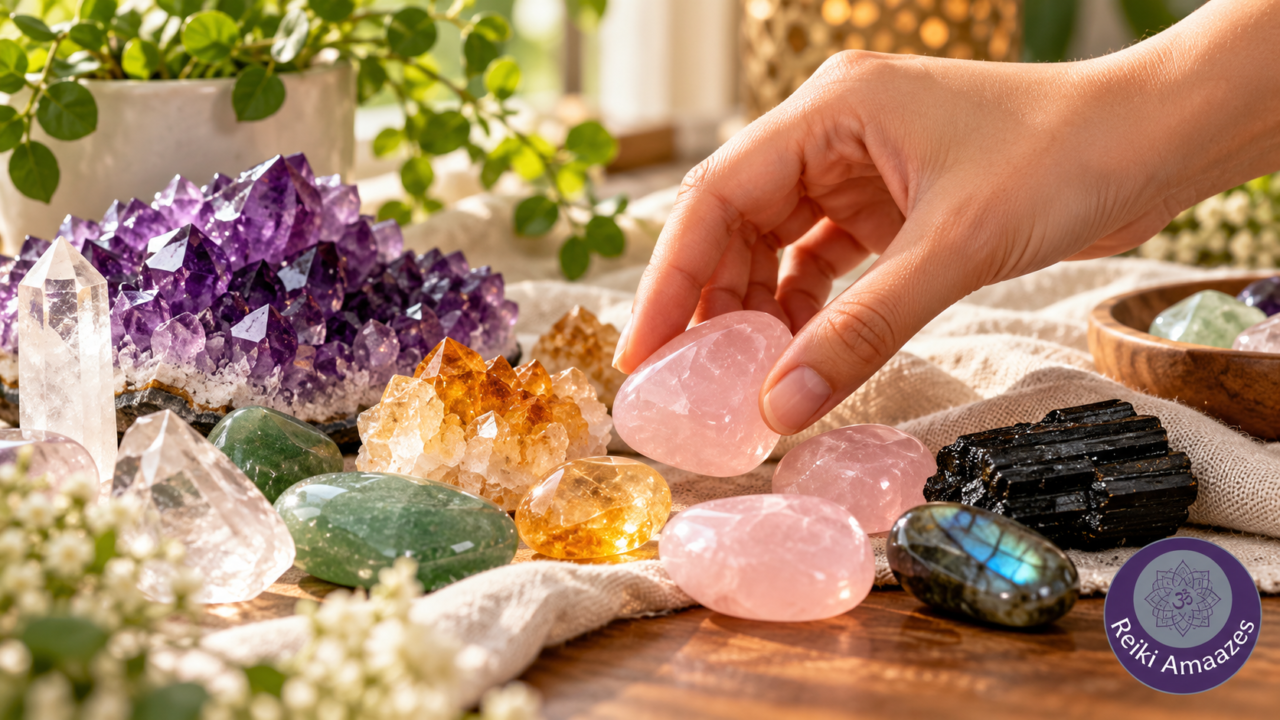
Start with an intention
Decide what you want more of: calm, confidence, focus, sleep, or a feeling of safety. Then look at the stones traditionally linked to it. The thirty listed below are organized by theme to make this easy. If you want calm, amethyst or blue lace-type stones are common starting points. If you want grounding, hematite or smoky quartz are.
Start with what you are drawn to
Buying by feel is a legitimate method. If you pick up a stone and like its color, weight or texture, that preference is useful information, because you are more likely to keep it close and use it. Many reiki practitioners recommend this approach for beginners, since a stone you ignore in a drawer does nothing for your routine. Trust your first reaction, then check the meaning afterward and see whether it suits you.
Start with a versatile stone
Clear quartz is the usual all-purpose choice. In crystal tradition it is said to amplify whatever intention you set, which makes it a flexible first purchase.
Practical buying tips
- Buy from a seller who names the stone. Reputable shops label their stones and can say whether a piece is natural, dyed or treated.
- Know the common substitutes. Some citrine sold in shops is heat-treated amethyst, and some bright blue or green stones are dyed. If the exact origin matters to you, ask.
- Choose a size you will use. A tumbled stone that fits in your palm works for holding and carrying. A small point or a bracelet bead works for wearing. Large clusters suit a shelf.
- Start with one to three stones. A small collection lets you learn each one properly before you add more.
- Handle before you buy when possible. Weight, texture and temperature are part of why people choose a stone, and a photograph hides all three.
Price does not determine how well a stone works for your practice. An inexpensive tumbled amethyst you enjoy using is worth more to you than a costly specimen kept behind glass.
Thirty Popular Healing Crystals and the Meanings Traditionally Attached to Them
Everything below is traditional symbolism, listed so you can match a stone to an intention. None of it is medical advice.
Calm, clarity and spiritual awareness
- Clear quartz: Traditionally called the “master” stone. Associated with clarity, amplification of intentions and a general-purpose companion to meditation.
- Amethyst: A purple quartz linked to calm, restful sleep, intuition and a quiet mind. A common stone for bedside tables and meditation spaces.
- Selenite: A soft, white, often translucent mineral associated with purity and mental clarity. Often used to cleanse other stones, though it is fragile and dissolves in water.
- Lepidolite: A lilac-colored stone traditionally linked to calm, emotional balance and easing worry before sleep.
- Sodalite: A deep blue stone associated with logical thinking, honest communication and mental organization.
- Lapis lazuli: A rich blue stone with a long history in jewelry and ritual objects. Associated with wisdom, truth and self-expression.
- Kyanite: A blue, blade-like mineral associated with communication and alignment. Tradition holds that it does not collect negative energy, so it is often said to need no cleansing.
- Fluorite: Comes in purple, green and clear bands. Associated with focus, organization and clear thinking, which makes it a favorite for study and desk spaces.
Love and emotional healing
- Rose quartz: A soft pink stone known as the stone of unconditional love. Associated with self-love, compassion and gentle emotional support.
- Green aventurine: A green stone associated with the heart, optimism and a sense of ease with change. Often described as a stone of opportunity.
- Amazonite: A blue-green stone associated with calm communication and speaking up kindly and clearly.
- Moonstone: A shimmering stone linked to cycles, intuition and new beginnings. Often used by people marking life transitions.
- Aquamarine: A pale blue stone associated with soothing emotions, clear speech and a settled mind.
- Jade: A stone valued for centuries in Asian traditions. Associated with harmony, balance and good fortune.
Protection and grounding
- Black tourmaline: One of the most popular protection stones. Associated with creating a sense of safety and shielding against negativity in a space.
- Smoky quartz: A brown to gray quartz associated with grounding, releasing tension and staying steady under stress.
- Obsidian: Natural volcanic glass, usually black. Associated with honest self-reflection and protection. Raw pieces can have sharp edges, so handle with care.
- Hematite: A heavy, metallic gray stone associated with grounding, focus and a feeling of being present in your body.
- Bloodstone: A dark green stone with red flecks. Traditionally linked to courage, stamina and vitality.
- Turquoise: A blue-green stone worn for centuries in several cultures as a protective talisman, associated with protection and wise communication.
- Howlite: A white stone with gray veining associated with patience, calm and releasing anger. It takes dye easily, so many blue “howlite” beads are dyed.
Confidence, energy and motivation
- Carnelian: An orange stone associated with motivation, creativity and warmth. A common choice for getting started on projects.
- Tiger’s eye: A golden-brown banded stone associated with confidence, willpower and practical decision-making.
- Garnet: A deep red stone associated with passion, energy and commitment.
- Sunstone: A warm, glittering stone associated with optimism, personal power and a sunny outlook.
- Labradorite: A gray stone that flashes blue and green. Associated with transformation, intuition and seeing change as a possibility.
Abundance and prosperity
- Citrine: A yellow to golden quartz, widely called the merchant’s stone. Associated with abundance, success and a positive attitude toward money.
- Pyrite: Known as “fool’s gold” for its brassy shine. Associated with confidence, determination and prosperity.
- Peridot: A bright olive-green stone associated with growth, renewal and a generous outlook.
- Malachite: A banded green stone associated with transformation and emotional honesty. It contains copper, so avoid water-soaking it and never use it to make drinks or elixirs.
If thirty stones feels like too many, choose one from the group that matches your main intention and begin there.
Cleansing and Charging Crystals: Simple Techniques and Which Stones Need Extra Care
In crystal practice, cleansing means clearing a stone of whatever energy it has picked up, whether from handling, from storage or from the people who owned it before you. Charging means setting it with a fresh intention. These are traditional practices, and many people find the ritual helps them start with a stone mindfully.
Common cleansing methods
- Smoke: Pass the stone through the smoke of incense or a cleansing herb such as sage or palo santo. This suits nearly every stone, including delicate ones.
- Sound: Ring a singing bowl, bell or tuning fork near the stone. This works for everything and carries no risk of damage.
- Selenite plate: Rest the stone on a selenite slab overnight. Keep the selenite dry.
- Moonlight: Leave stones on a windowsill overnight, particularly around a full moon. This suits most stones and is gentle.
- Running water: Rinse briefly under cool water. Use only for hard, non-porous stones such as clear quartz or smoky quartz.
- Breath and intention: Hold the stone, breathe slowly, and state your intention to clear it. This takes under a minute and always works for ritual purposes.
Stones to keep away from water
Some stones dissolve, crumble or react with water and few are sensitive to moisture. Selenite is the main stone to keep dry. For other stones, when in doubt, use a soft, dry cloth or choose a water-free crystal-cleansing method instead.
Use smoke, sound or moonlight for these. If you are unsure about a particular stone, ask the seller or choose a dry method.
Stones to keep out of strong sunlight
Prolonged direct sun can fade the color of amethyst, rose quartz, citrine, aquamarine and fluorite. Moonlight or indirect light gives you the same ritual effect with no risk. Sun-charging is fine for hardy stones such as clear quartz or carnelian, but keep it short.
How often to cleanse
There is no fixed rule. A reasonable pattern is to cleanse a stone when you first bring it home, after periods of heavy use, and whenever it feels like time. Stones you wear daily are usually cleansed more often than a decorative piece on a shelf.
Charging with an intention
Hold the stone in both hands. State, aloud or silently, what you want it to support, for example “calm focus” or “steady confidence.” Keep the wording short and positive, and remember that the intention is yours. The stone is the reminder.
How Reiki and Crystals Work Together in a Session
Reiki is a Japanese practice in which a practitioner channels what they describe as universal life energy through light touch or hands held near the body, aiming to promote relaxation and a sense of balance. Reiki does not require crystals, and plenty of practitioners work without them. Those who do include them tend to use them in a few ways.
- On the body: Placing stones on or beside the client, often along the chakra points.
- Around the table: Setting stones at the corners of a treatment table or in a pattern around the client, sometimes called a grid.
- In the hand: Holding a stone during the session as a point of focus for the practitioner’s intention.
- In the room: Keeping stones such as black tourmaline or selenite in the treatment space to set a calm atmosphere.
The reasoning in this tradition is that a stone can help hold a particular intention steady while the practitioner works. A session with crystals is a way of adding ritual and focus to the practice. Reiki traditionally works with vibration and energy, and you can read more on that in Reiki and vibrations.
Some practitioners combine stones with reiki symbols, placing a stone on a drawn symbol or holding it while visualizing one. If you are interested in how symbols are used, the Dai Ko Myo reiki symbol is a good one to read about. Symbols are normally taught in a reiki class, so treat that reading as background and take instruction from a qualified teacher before using them.
If you book a session where crystals are used, it is reasonable to ask the practitioner which stones they use and why. You can also ask them to leave stones out if you would prefer it that way.
Placing Crystals During Self-Reiki and Meditation
You can bring stones into your own practice at home without any special equipment. Self-reiki is also considered important for people who offer healing to others, a point covered in why self-healing is important for healers.

A simple chakra layout
Lie on your back somewhere comfortable. Place one stone on each of the traditional chakra points, from the base of the body to the crown. The color pairings below are the most commonly taught:
- Root (base of spine): Hematite, black tourmaline or garnet.
- Sacral (below the navel): Carnelian.
- Solar plexus (above the navel): Citrine or tiger’s eye.
- Heart (center of chest): Rose quartz or green aventurine.
- Throat: Sodalite, aquamarine or amazonite.
- Third eye (forehead): Lapis lazuli or amethyst.
- Crown (top of the head): Clear quartz or amethyst.
You do not need seven stones. One stone on the heart or the solar plexus is a perfectly good start. For a fuller explanation of each pairing, read chakra healing crystals.
A short routine
- Cleanse your stones using a method that suits them.
- Settle into a quiet position and set your intention in a short sentence.
- Place your stones, or hold one in each hand.
- Rest your own hands over your heart and belly, or in whichever self-reiki positions you have learned.
- Breathe slowly for ten to twenty minutes.
- Remove the stones, and take a moment before you stand up.
Practical tips
- Hold a single stone in your non-dominant hand if lying down is not practical. Many people hold one during a seated meditation.
- Keep the routine short at first. Ten minutes done regularly is more useful than an hour done once.
Crystals for Specific Intentions: Calm, Love, Protection, Abundance
Once you are comfortable with the basics, you can build small sets for the intentions you return to most. These pairings are traditional, and the point is to make them your own.
Calm
Amethyst, lepidolite and howlite are the usual choices. Keep one by your bed or hold one while you breathe slowly. Many people pair a calming stone with a regular wind-down habit, such as dimming lights and putting away screens, so the stone becomes a cue for that routine.
Love
Rose quartz is the classic stone for love, whether romantic, familial or toward yourself. Green aventurine and amazonite are also common for opening the heart and speaking kindly. If you want to build a love-focused ritual, the Valentine’s Day reiki meditation gives a structured way to practice with these stones.
Protection
Black tourmaline, smoky quartz and obsidian are the stones most associated with protection. People place them near the front door, on a desk, or in a bag. The idea is to create a sense of safety in a space you spend time in. They do not replace practical safety measures such as locks or sound judgment.
Abundance
Citrine and pyrite lead this category, with green aventurine and peridot as supporting stones. Abundance work in crystal practice means setting an intention about your relationship with money, opportunity and generosity. It does not mean a stone will produce income. Pair the stone with real actions such as budgeting, learning a skill or reaching out for work. For a meditation approach, see the dollar symbol meditation with money reiki.
Building a small kit
A starter kit of four to six stones covers most needs: clear quartz, amethyst, rose quartz, black tourmaline, citrine and one stone you simply like. Keep them in a small pouch or dish so they are easy to reach.
Where to Go Next: Chakras, Symbols, Vibrations and Self-Healing
After you have used one or two stones for a few weeks, you will probably notice which ones you reach for and which you ignore. That is useful information. Let it guide what you add next.
From there, several directions are worth exploring:
- Chakras: Learning the seven main chakras and their associated colors gives structure to stone placement. Start with chakra healing crystals.
- Reiki training: If the energy-work side appeals to you, consider a class with a qualified teacher. Reasons people give for studying reiki are collected in reasons to learn reiki.
- Symbols and meditation: Symbols and affirmations can be combined with stones for focused practice sessions.
- Self-healing habits: Regular self-reiki, quiet time and good rest benefit most people whether or not a crystal is involved.
Keep a short notebook of what you tried, which stone you used and how you felt afterward. Over a month or two, patterns show up, and you can decide for yourself what is worth keeping in your routine.
Read next: Money Magnet Bracelet: How Gemstone Bracelets Support Wealth and Abundance Work
You may also like



You may also like
 A client once described her anxiety to me as an old, uncomfortable coat she coul...
 You know that feeling when everyone around you is talking about "trusting your i...
 What if healing wasn’t limited by distance at all?Not by touch, not by location—...
 Hey beautiful souls,Do you think it's difficult to connect with higher realms an...
 To cleanse your aura with Reiki: find a quiet space, set a clear intention, acti...
![26 Reiki Points For Self Treatment – Refresh Yourself Everyday-[Updated]](https://reikiamazes.com/wp-content/uploads/./Feature-Image-Small.jpg) Scroll Down to Checkout the latest Free DownloadsReiki I - is the base or ...
Scroll Down to Checkout the latest Free DownloadsReiki I - is the base or ...
