A client once described her anxiety to me as an old, uncomfortable coat she could not seem to take off, even though she genuinely wanted to. She said it almost apologetically, as if wanting to feel calm should have been enough on its own. I told her what I am about to tell you. You may be addicted to your emotions, quite literally, at a cellular level, and that reframe is not an insult. It is actually the beginning of real change.
That idea, drawn from Dr. Joe Dispenza’s teaching on emotions and cellular biology, changed how I approach this work with clients, and I think it is worth sitting with slowly rather than rushing past, since learning you might be addicted to your emotions can feel unsettling before it feels useful.
TL;DR
Can You Actually Become Addicted To An Emotion?
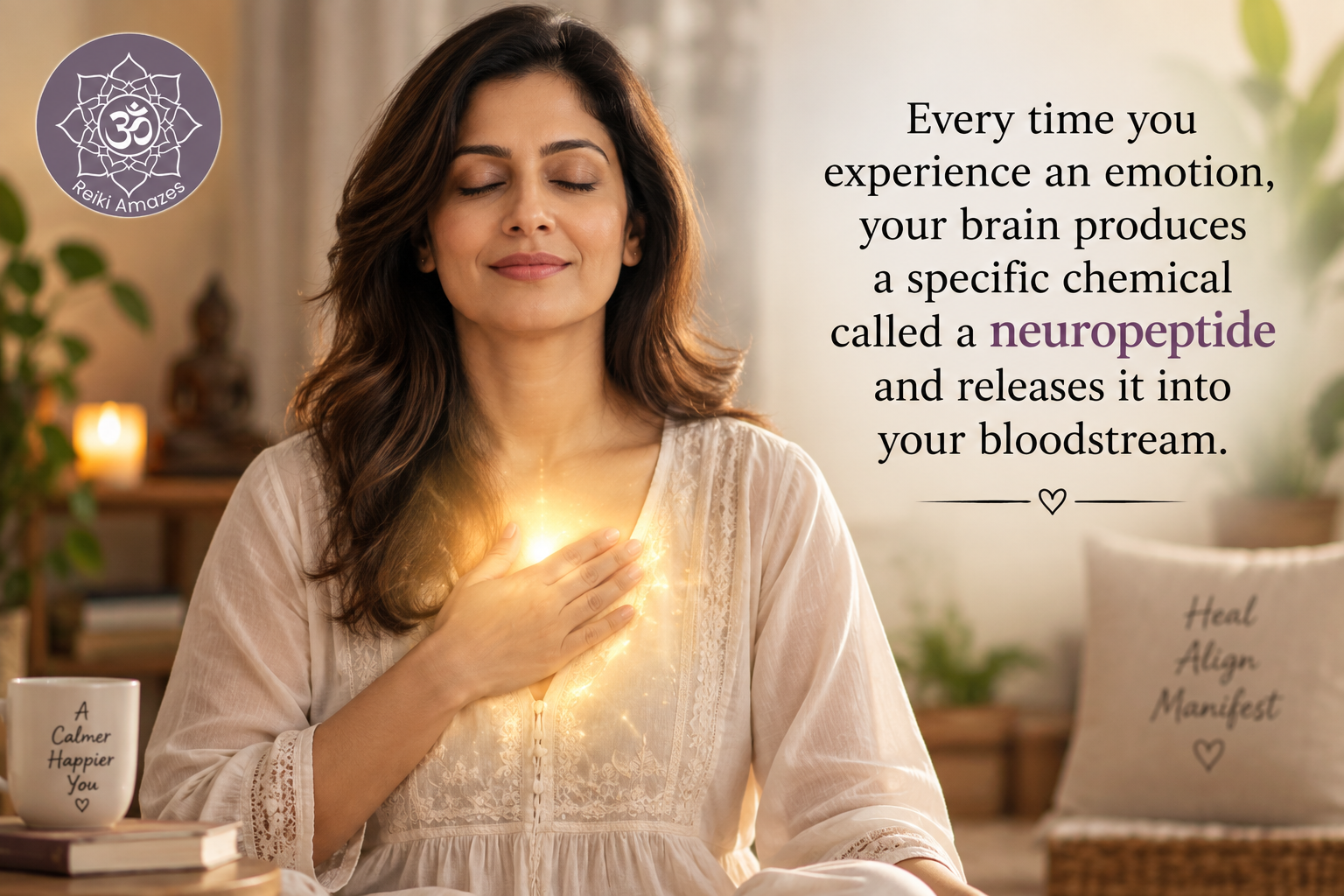
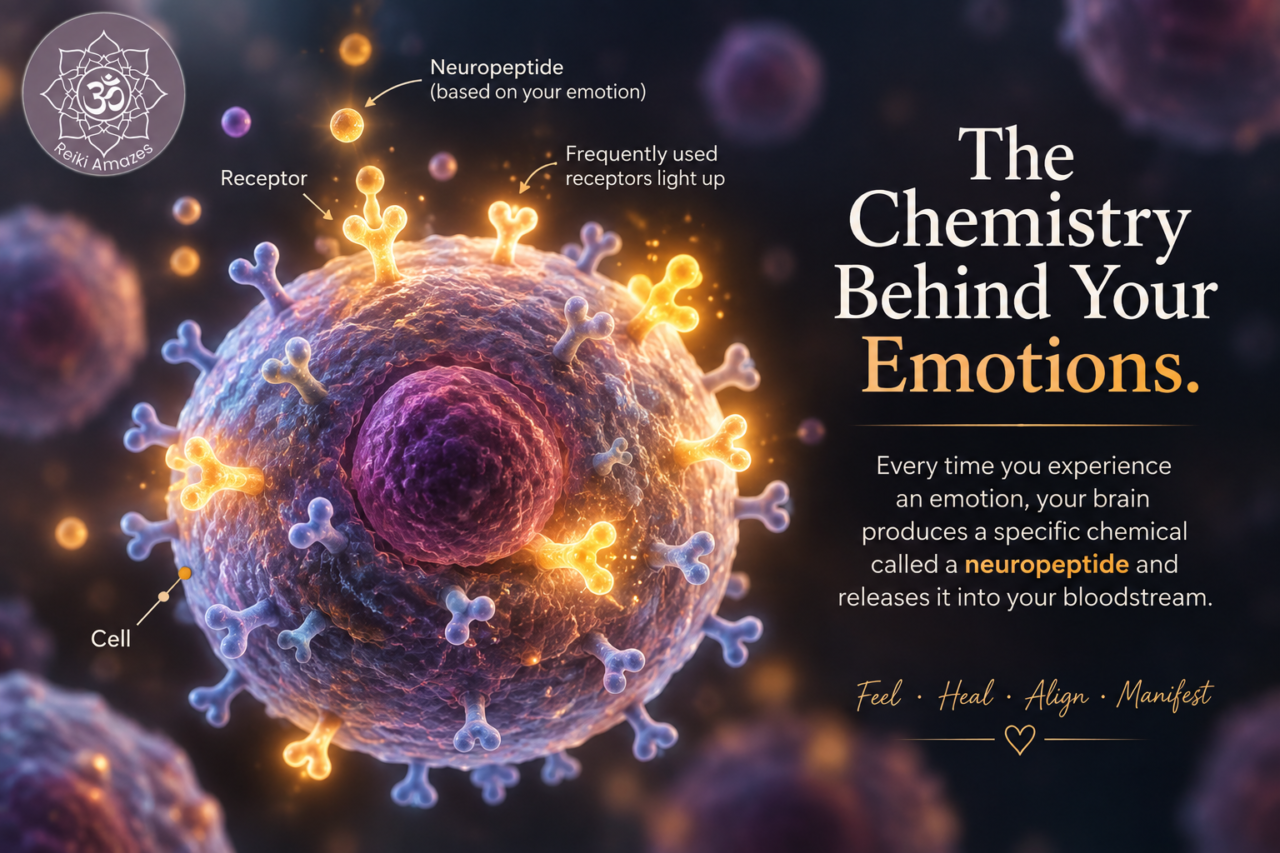
Yes, in a real, biological sense. Every emotion you experience is linked to a chemical messenger called a neuropeptide, released into your bloodstream, and your cells develop receptors specifically tuned to receive it.
Dr. Joe Dispenza teaches that repeating an emotion often enough increases the number of receptors your cells hold for that specific chemical, so your body can start to crave the very feeling that is making you miserable.
Being addicted to your emotions in this way is not a flaw, it is a learned, physical pattern, and learned patterns can be changed with consistent practice and this is often the single most freeing part of this entire teaching.
How Emotions Become Chemical Habits
Every time you experience an emotion, your brain produces a neuropeptide and releases it into your bloodstream. Your cells carry receptors specifically designed to receive these chemicals, and the more often a particular emotion fires, the more receptors your cells develop for that exact chemical.
Over time, cells that are saturated with receptors for a specific chemical can begin to signal for more of it, since receiving that familiar chemical is simply what they have become accustomed to doing.
Dr. Joe Dispenza describes this directly as a form of being addicted to your emotions, not a metaphor, but something closer to cellular habit formation.
The next time a familiar heavy emotion shows up, try silently naming it as “an old chemical asking to be fed” rather than “proof something is wrong with me.” The shift in language alone tends to soften the shame that usually makes these patterns harder to interrupt.
Why This Matters For Your Manifestation Practice
When stress, fear, or a sense of lack becomes familiar, your brain and body can learn to stay in a heightened state of alert. This can make you more likely to notice threats, expect the worst, and experience anxious thoughts, even when you logically know you are safe in this moment.
Repeated stress can reinforce brain and body patterns that keep anxiety active, almost like a groove the nervous system keeps returning to out of habit rather than necessity. The genuinely good news is that these patterns are learnable, which also means they are changeable.
With awareness, calming practices, and supportive daily habits, you can gradually teach your nervous system to feel safer and more regulated, rather than staying addicted to your emotions at the level your body has simply grown used to.
Manifestation work done while you are still addicted to your emotions in this way tends to feel like pushing uphill, since your body is quietly asking for the very state you are trying to move beyond.
This is not about blaming yourself for feeling anxious, sad, or afraid. These patterns formed for real reasons, often protective ones, at some point in your life. Compassion toward that history tends to make this work go faster, not slower.
Today’s Practice: Five Steps To Interrupt An Emotional Habit
This practice works best done slowly and honestly, one emotion at a time.
- Map your emotional body. Sit quietly and scan your body from head to toe, noticing where you feel your most repeated emotion physically. Stress might live as tightness in your chest. Anxiety as a knot in your stomach. Sadness as heaviness in your throat. Locate exactly where your dominant emotion physically lives right now, since this is where being addicted to your emotions actually shows up in the body, not just in your thinking.
- Acknowledge the addiction. Recognize that your emotional patterns are chemical habits built over time. Instead of saying “why am I always anxious,” try “my cells have been conditioned to expect anxiety chemicals, and they are simply requesting what they know.” That shift from judgment to understanding is itself a pattern interrupt, and simply naming that you are addicted to your emotions out loud tends to lower the shame attached to the pattern.
- Ignore the old chemistry deliberately. Every time you refuse to indulge the familiar emotional pattern, you are reducing the demand from your cells for that chemical. When you consistently decline to dwell on the thoughts that produce the familiar negative emotion, the cellular receptors for that chemical are believed to gradually reduce in number over time. This step is where you actively stop feeding the part of you that is addicted to your emotions.
- Flood your mind and body with a new emotion. Immediately after interrupting the old pattern, deliberately generate an elevated feeling to introduce new chemistry. Close your eyes and spend two minutes genuinely feeling gratitude, not thinking about gratitude, actually feeling it in your chest, your stomach, your whole body. That felt emotion releases a different set of chemicals your cells can begin to recognize and, over time, prefer, which is the direct antidote to staying addicted to your emotions in their old, familiar form.
- Be patient. Cellular change takes consistency and time. Do not give up because you do not feel different immediately. Think of it like changing your diet. On day one of eating differently, your cravings for the old pattern are still there. After weeks of consistent new input, the cravings genuinely shift. Your emotional chemistry tends to work in much the same way, and unwinding what has kept you addicted to your emotions for years genuinely deserves that same patience.
Common Mistakes People Make With This Practice
- Judging themselves for feeling addicted to your emotions in the first place, which usually reinforces shame rather than supporting change
- Trying to force gratitude or joy they do not genuinely feel, which tends to feel hollow and does little to actually shift chemistry
- Expecting one good day to undo years of a familiar emotional pattern, when this is closer to a gradual, consistent retraining process, not an overnight fix for being addicted to your emotions
- Skipping the noticing step and jumping straight to forcing positivity, which skips the part where real awareness actually begins
Being addicted to your emotions is not a life sentence, it is simply evidence that your body is very good at learning, which means it is equally capable of learning something new. That single reframe, from permanent flaw to changeable habit, is often the real turning point in this work.
Quick Checklist For Today
- Notice where your most familiar emotion physically lives in your body
- Name the pattern as a chemical habit, not a personal failing, a sign you are addicted to your emotions rather than broken
- Consciously decline to dwell in the old, familiar thought loop
- Generate a genuinely felt new emotion for at least a minute or two
- Expect gradual change, not instant results, and keep going anyway
Recommended Read: The Power of Neuroplasticity for Manifestation
Frequently Asked Questions

Is being “addicted” to an emotion a real scientific concept?
It draws on real biology, neuropeptides and cellular receptors are genuine, well documented parts of how the body communicates internally. The specific framing of being addicted to your emotions is a popularized teaching built on that biology, associated with Dr. Joe Dispenza, rather than an official clinical diagnosis, so it is worth holding as a useful lens rather than a strict medical fact.
Can this practice help with anxiety specifically?
Many people find that consciously interrupting familiar anxious thought loops and deliberately generating calmer, more regulated feelings helps over time, though ongoing or severe anxiety is also worth discussing with a mental health professional alongside any practice like this one, especially if being addicted to your emotions has started to feel unmanageable on your own.
How long does it take to change an emotional pattern like this?
There is no fixed timeline, since it depends on how long the pattern has been practiced and how consistently you interrupt it. Most people notice small shifts over a few weeks of steady daily practice, similar to how dietary cravings gradually change with consistent new habits, and similar to how long it took to become addicted to your emotions in the first place.
What if I cannot access a positive emotion at all in the moment?
Start smaller and more neutral rather than forcing something big. A small sense of ease, curiosity, or simple relief is a genuine, felt emotion, and it still introduces different chemistry than staying in the old pattern, which is often enough progress on a day when you are deeply addicted to your emotions and simply cannot reach for something bigger.
Is it normal for old emotional patterns to come back after some progress?
Yes, this is expected rather than a sign of failure. A pattern that has been practiced for years rarely disappears permanently after a few good weeks. Each time you notice it and consciously choose differently, you are continuing to weaken it, and continuing to loosen how addicted to your emotions that specific pattern still is.
Let’s Hear From You
What is one emotional habit you are ready to break this week? Drop it below and make it your intention for today. Naming it honestly is often the real first step in no longer staying addicted to your emotions on autopilot, and choosing, even once today, to respond differently.
If you want more of these daily practices, along with the moments that do not always make it into a full post, this is exactly what I share inside our dedicated WhatsApp community.
🌙
Join The Circle
Come join us in the Reiki Amazes WhatsApp community
This is where I share the small daily shifts, gentle reminders, and practical energy work. No pressure, no noise. Just a warm space to keep growing together. Join the WhatsApp Community →
Join The Circle
Come join us in the Reiki Amazes WhatsApp community
This is where I share the small daily shifts, gentle reminders, and practical energy work. No pressure, no noise. Just a warm space to keep growing together.
Join the WhatsApp Community →Reiki Blessings,
Jivita
You may also like




You may also like
 You know that feeling when everyone around you is talking about "trusting your i...
 What if healing wasn’t limited by distance at all?Not by touch, not by location—...
 Hey beautiful souls,Do you think it's difficult to connect with higher realms an...
 To cleanse your aura with Reiki: find a quiet space, set a clear intention, acti...
![26 Reiki Points For Self Treatment – Refresh Yourself Everyday-[Updated]](https://reikiamazes.com/wp-content/uploads/./Feature-Image-Small.jpg) Scroll Down to Checkout the latest Free DownloadsReiki I - is the base or ...
Scroll Down to Checkout the latest Free DownloadsReiki I - is the base or ...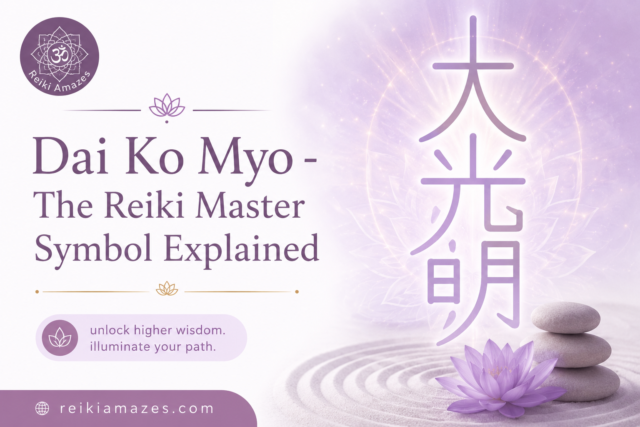 TLDR:Dai Ko Myo is the most important symbol in Reiki. It is taught at the highe...

