TLDR:
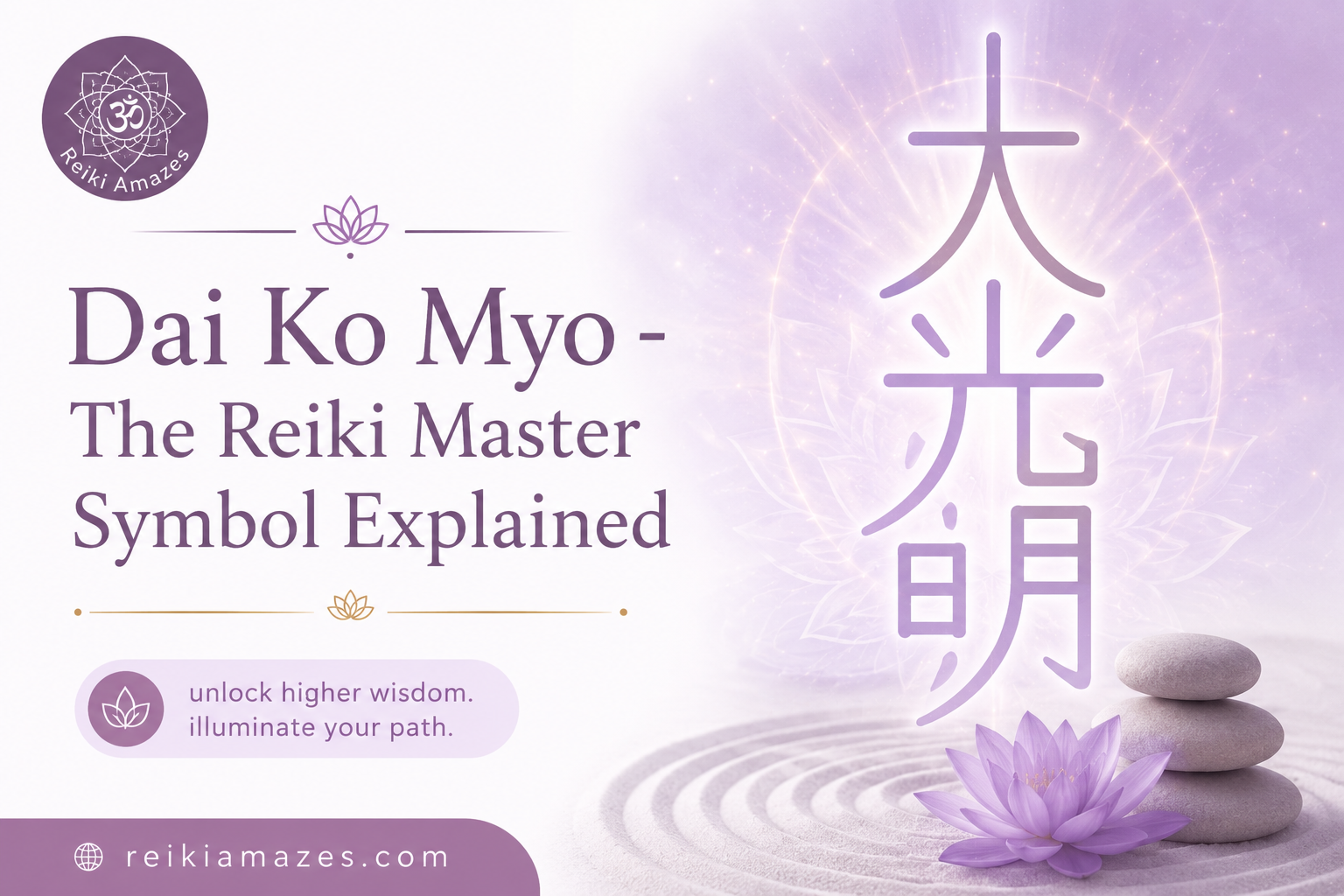
Dai Ko Myo is the most important symbol in Reiki. It is taught at the highest level, called Shinpiden or Level 3. Dai Ko Myo means “Great Shining Light” or “Great Enlightenment.” Often Reiki Masters use DKM symbol to heal a person on a soul level. This shows how powerful and special this symbol is for anyone learning Reiki.
This is not just another symbol to learn. It is the master key that opens the door to higher spiritual levels. Dr. Mikao Usui, the founder of Reiki, created this symbol as part of his original system. People respect it so much because it connects you to the highest level of energy in Reiki. It can help bring real change to how you think and feel about life.
Spiritual growth is not always easy. But Dai Ko Myo gives you steady, strong energy to help you through it. It helps you see your true self clearly, like a flashlight cutting through fog. It supports both personal healing and deeper spiritual growth. This is why Reiki Masters see it as such an important tool.
Whether you want to understand Reiki better or you’re curious about reaching a higher spiritual level, Dai Ko Myo can guide you there. Learning all that it can do takes time. But each new thing you learn brings you closer to a deeper connection with this energy.
What Dai Ko Myo Can Do
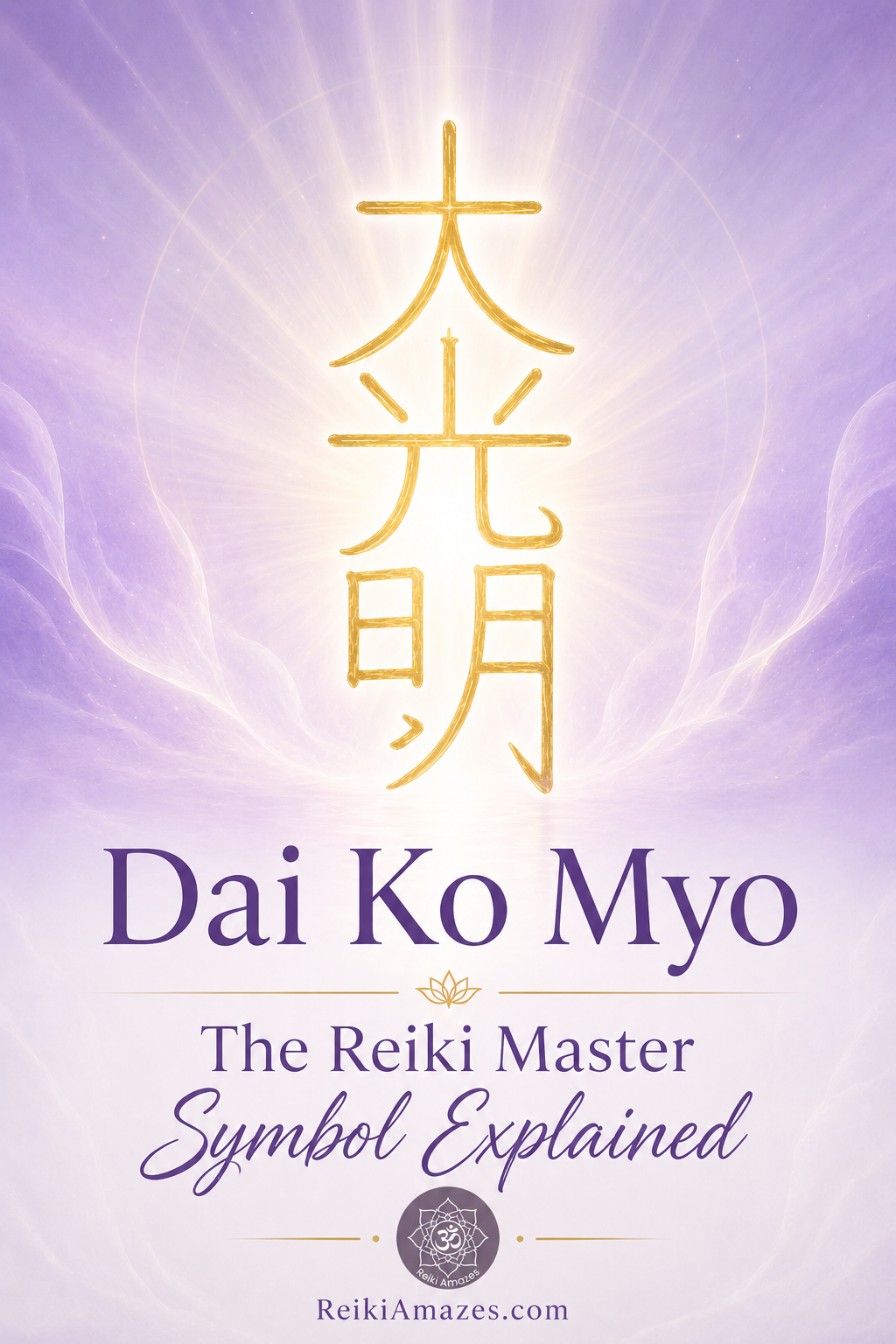
Dai Ko Myo is special because it does so much. It combines the power of three earlier Reiki symbols: Cho Ku Rei, Sei He Ki, and Hon Sha Ze Sho Nen into one strong symbol. Think of those three symbols as ingredients, and Dai Ko Myo as the recipe that brings them all together.
Dai Ko Myo is not just a symbol for show. It helps with spiritual growth and healing. It can help clear away old emotional weight from the past. Think of it like a broom that helps clean up old baggage so you can move forward more easily.
During a Reiki session, Dai Ko Myo opens the crown chakra. This lets energy flow in more freely. For people focused on spiritual growth, this is an important part of the process. The symbol is said to boost both light and wisdom, which can make your healing skills stronger.
Learning to use Dai Ko Myo well takes practice. At first, it might feel new and a little uncertain—like learning to ride a bike. But with time, it becomes easier and more rewarding. Keep practicing and stay open to what this symbol can teach you. There is a lot of room to grow with Dai Ko Myo as part of your practice.
How to Use Dai Ko Myo
If you want to start using Dai Ko Myo, it helps to understand a few simple methods. You can draw it, picture it in your mind, or trace it in the air. Each way works a little differently, and you can pick whichever one feels right for you like choosing how you like your coffee made.
Many practitioners draw Dai Ko Myo on their palms or over a chakra. Others prefer to simply picture the symbol glowing with bright energy and imagine that light filling them up. There’s no single “correct” way to do it. The goal is to find the method that feels natural to you.
Dai Ko Myo can also make your healing sessions stronger. Many practitioners use it to create sessions that feel personal and suited to each person’s needs.
There are also stories from practitioners who have used Dai Ko Myo to help with deep healing and personal growth. These stories show how flexible the symbol can be, adjusting to fit each person’s situation.
It’s important to use this symbol carefully and with respect. Always think about doing what is right for the person you’re helping. Keep an open heart, and let Dai Ko Myo guide the healing in a way that feels good and safe for everyone involved.
How to Draw Dai Ko Myo
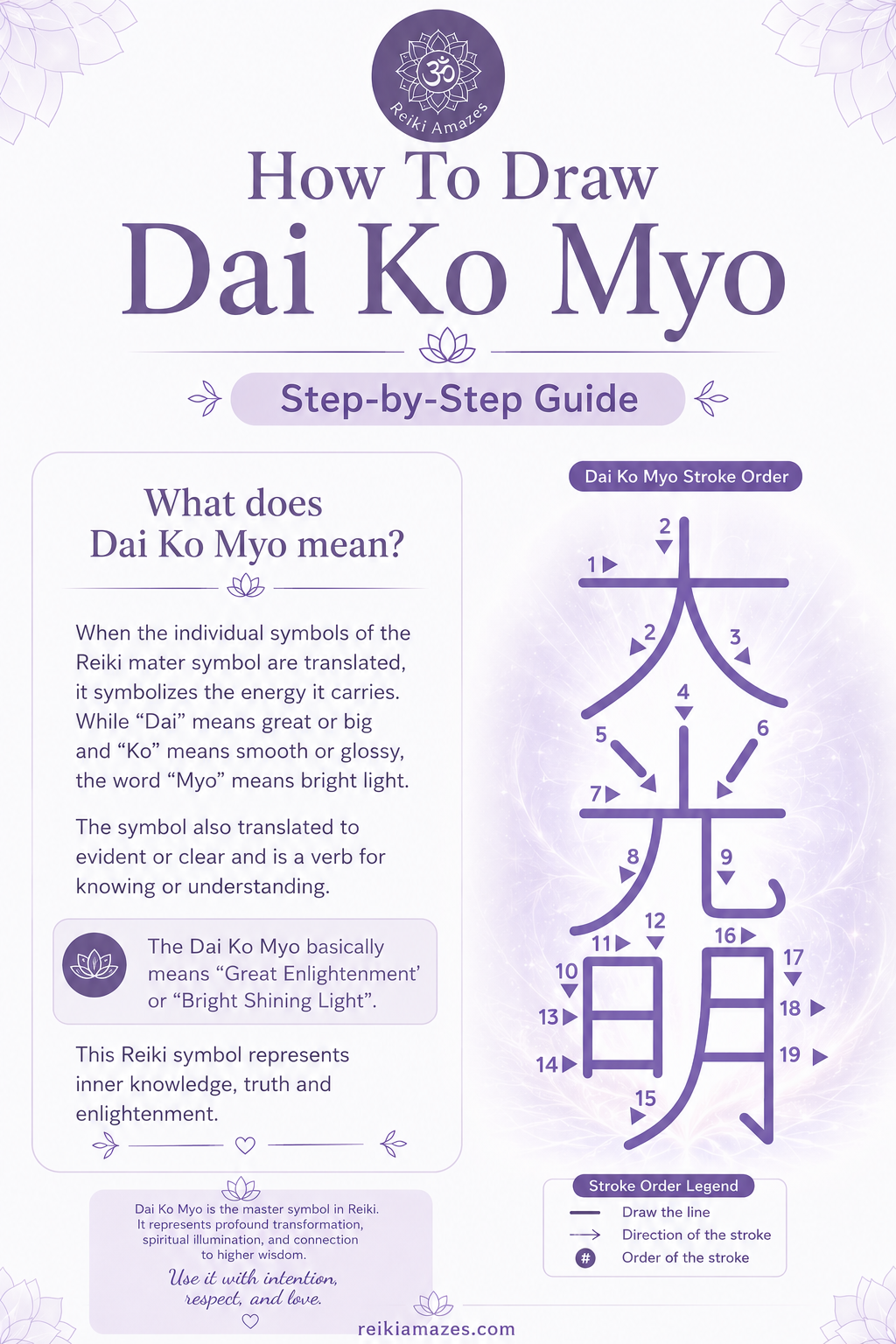
Dai Ko Myo is made up of three parts, and each part has its own meaning. “Dai” means great or big. “Ko” means smooth or shining. “Myo” means bright light, and it can also mean something that is clear or easy to understand. Put together, the symbol means “Great Shining Light” or “Great Enlightenment.”
Drawing Dai Ko Myo is a bit like writing three Japanese characters one after another, each built from a small number of simple strokes. A good way to learn it is to practice one character at a time before joining all three together:
- Dai (大): Start with one horizontal line across the top. Then draw a single stroke down through the middle, finishing with two diagonal lines that spread out to the left and right, like a person standing with arms open.
- Ko (光): This character has more strokes. Begin with a short vertical line and a horizontal line near the top, then add two small diagonal strokes underneath. Finish with a longer curved stroke that sweeps down and to the side.
- Myo (明): This character is drawn in two halves, side by side. The left half looks like a small box shape, built from a few short straight strokes. The right half is drawn with a few vertical and diagonal lines that taper down, ending in a longer stroke at the bottom.
A few simple tips can make this easier:
- Go slowly at first. Trace each character a few times before trying to draw it from memory.
- Follow a consistent stroke order. Drawing the lines in the same order every time helps your hand remember the shape.
- Practice in the air or on paper. Some practitioners like to trace the symbol in the air during a Reiki session, while others prefer to draw it on paper first until it feels natural.
- Keep your strokes smooth and unhurried. This is a symbol meant to bring calm and clarity, so there’s no need to rush while learning it.
With a little regular practice, drawing Dai Ko Myo becomes easier and starts to feel like second nature. Remember, this is the master symbol in Reiki, so it’s worth taking the time to learn it with care, respect, and intention.
Add a Touch of Healing Energy To Your Space with Dai Ko Myo Reiki Symbol Art
Invite the timeless energy of Dai Ko Myo into your home, healing room, or meditation space with this beautifully crafted printable artwork. Available in elegant black, healing green, luxurious gold, and artistic editions, each design is created to bring a sense of peace, inspiration, and spiritual beauty to your surroundings.
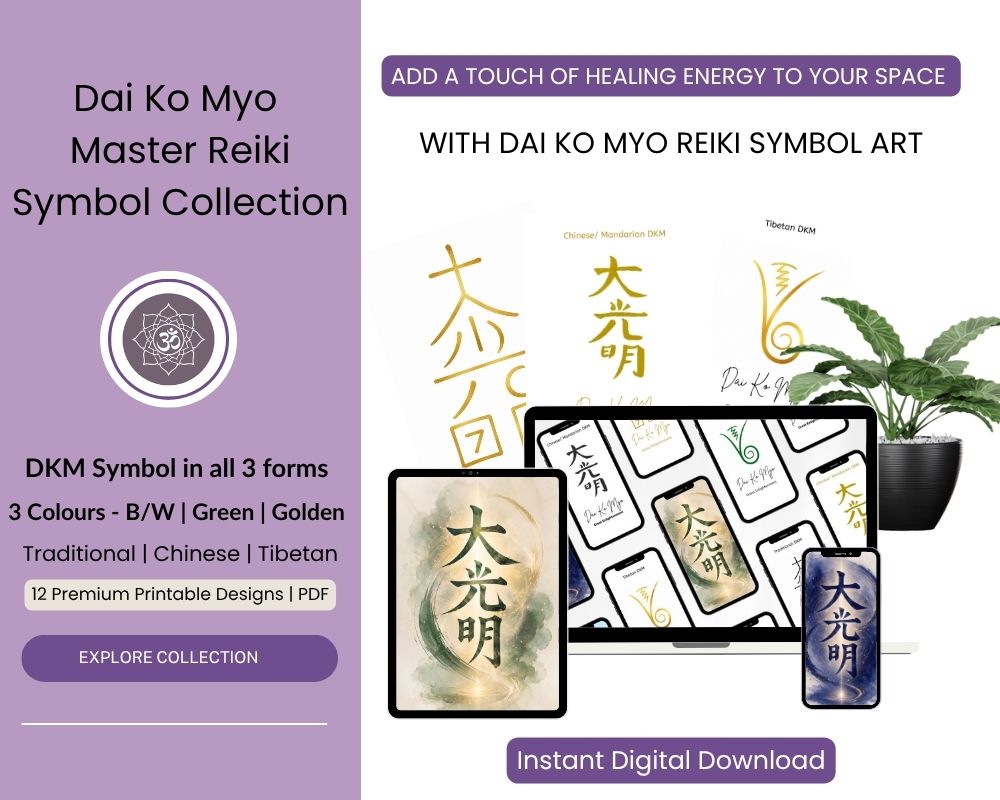
Click here to Explore the complete Dai Ko Myo Collection
Recommended Read:
Traditional vs. Tibetan Dai Ko Myo
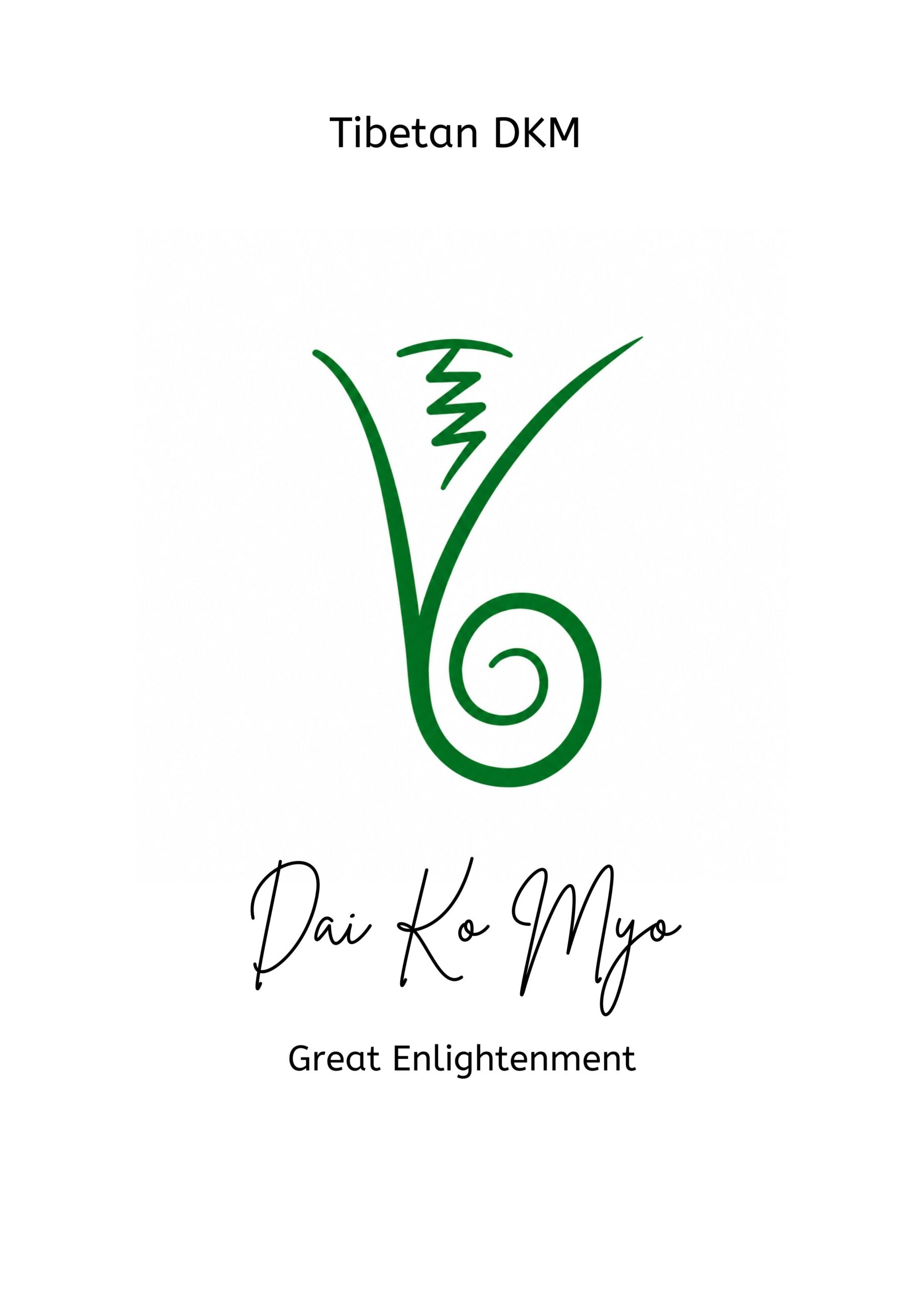
Different schools of Reiki teach slightly different versions of Dai Ko Myo. Along with the traditional Usui version, Tibetan Reiki has its own version called Dumo. Both connect you to higher energy, but they offer different experiences—like two paths leading up the same mountain.
The traditional Usui version is rich in history and tradition. Many practitioners see it as the foundation of their connection to Reiki energy.
The Tibetan Dumo version has a different feel. People often describe it as having a stronger, more intense energy. You could compare it to the difference between a smooth coffee and a strong shot of espresso:)
Choosing one version, or using both, depends on what feels right for you. Each version comes from its own tradition and teaches its own lessons. They simply offer different paths to the same kind of growth.
Whichever version you choose, think about what fits your own goals and energy. Having more than one option means you have more tools to work with.
Be curious and let these symbols guide you toward deeper healing and understanding.
Frequently Asked Questions About the Dai Ko Myo Symbol
Frequently asked questions about Dai Ko Myo, the Reiki Master symbol, covering its meaning, how and when it's usedFAQ description
Is Dai Ko Myo the most powerful Reiki symbol?
Among the original Usui symbols, yes - Dai Ko Myo is considered the most powerful because it combines the functions of Cho Ku Rei, Sei He Ki, and Hon Sha Ze Sho Nen into one. It's specifically for Reiki Master level (Shinpiden).
Is there a Karuna Reiki version of Dai Ko Myo?
Since you can learn Karuna Reiki only after Reiki Master degree, you can easily accomodate or make sandwitch using symbols for Karuna Reiki as well as Traditional Reiki symbols. It's important to remember that they come from different lineages and aren't interchangeable.
Can you use Dai Ko Myo on yourself?
Yes for sure. Many Reiki Masters use Dai Ko Myo in self-healing practice, often visualizing it over the crown chakra or drawing it on the palms before a self-treatment session, the same way it's used in sessions with others.
Does Dai Ko Myo work for distance healing, like Hon Sha Ze Sho Nen does?
Yes, since Dai Ko Myo already contains the energy of Hon Sha Ze Sho Nen within it, practitioners can use it for distance healing on its own. Many Reiki Masters combine both symbols in a distance session for added depth and focus.
Do you need a teacher to learn Dai Ko Myo, or can you learn it Online also?
Absolutely, you can learn Dai Ko Myo online.
Reiki has a long-standing tradition of distance attunements, and many Reiki Masters now teach through live online sessions. It's just as powerful as an in-person class, and often more convenient, letting you train at your own pace from anywhere.
You may also like


You may also like
 Have you ever picked up a beautiful healing crystal and wondered what makes it s...
 A client once described her anxiety to me as an old, uncomfortable coat she coul...
 You know that feeling when everyone around you is talking about "trusting your i...
 What if healing wasn’t limited by distance at all?Not by touch, not by location—...
 Hey beautiful souls,Do you think it's difficult to connect with higher realms an...
 To cleanse your aura with Reiki: find a quiet space, set a clear intention, acti...
